
Skip to content

Services / System Integrations & APIs

Make the tools you already own work together.

Most businesses do not need more software. They need the systems they have to connect. We design and build secure, scalable integrations and custom APIs that unify your tools, keep data in sync, and remove the manual work between them.

  • Custom APIs
  • Middleware
  • Data sync
  • Secure access
  • Fewer places to type things

    Information entered once and showing up everywhere it is needed

  • One source of truth

    Systems that agree because they are connected, not reconciled

  • Growth without the tangle

    Integrations designed so adding a tool does not add chaos

Is this you?

You might need this if…

A person at a desk typing an order from one screen into another
  • Someone re-keys orders from one system into another every day.

    A person is doing the job of an integration, and doing it slower.

  • Customers see one status in the portal and hear another from support.

    Two systems, two truths, one confused customer.

  • Your ERP, CRM, and accounting platform were each chosen by a different leader.

    Each one is fine. Together they are a reconciliation project.

  • A partner needs to send you data and there is no clean way to receive it.

    You need an API, and you need it to be secure.

What we build

How we help your systems work together.

Integration is not glue code. It is architecture, security, and knowing where the truth lives. These are the pieces.

  • Custom API development

    APIs designed for your environment, documented, versioned, and built to be used by others.

  • Middleware and connectors

    Cloud, on-premises, or hybrid systems talking to each other through a layer you control.

  • Real-time and scheduled sync

    Information kept accurate across platforms, live when it matters and on a schedule when it does not.

  • Event-driven orchestration

    Actions and processes triggered automatically by business events and conditions.

  • Secure authentication

    Single sign-on, OAuth2, and role-based access so connected systems stay protected.

  • Unified portals

    One secure place where your team sees and works across the tools that used to be separate.

Where most work starts

Systems inventory

A short engagement that maps your systems and data flows and recommends what to connect first.

  • Every system, and who owns it

    The tools in use, what each one is responsible for, and who decides about it.

  • Where data repeats or disagrees

    The places information is typed twice, copied by hand, or out of sync.

  • What to connect first

    The one connection that removes the most manual work, scoped to build first.

What changes

What changes when systems agree.

  • Data entry

    Before Re-keyed by hand between systems, with typos

    After Entered once and showing up everywhere it is needed

  • The customer record

    Before Sales, support, and finance each see a different version

    After One record everyone works from, the customer included

  • New tools

    Before Every addition adds another tangle to reconcile

    After An integration layer that grows with you instead of a web nobody understands

Proof

Where we have done this before.

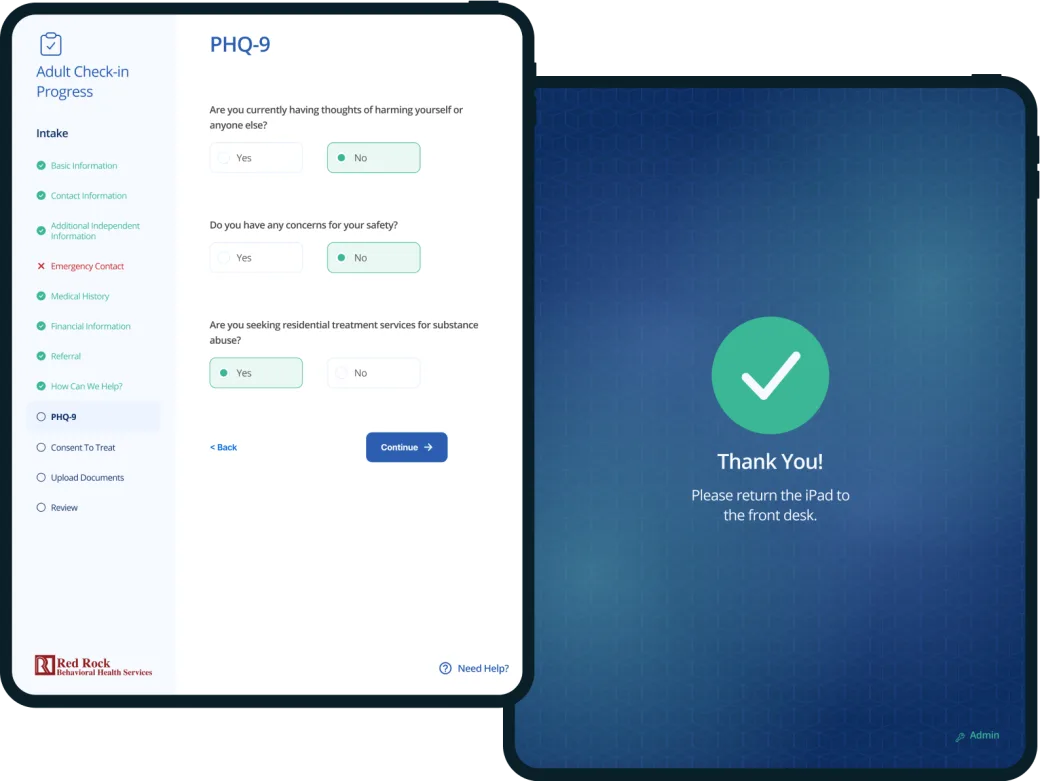
Red Rock Behavioral Health · EHR integration

Patient intake that writes straight into the health record, with Teams, SMS, and email connected.

An iPad-first intake application integrated in real time with Netsmart myAvatar, Red Rock’s EHR, plus Microsoft Teams and notification channels. Nobody re-keys a form; records update as the patient types.

Real-time

Intake to EHR, no re-entry
Read the case study
Two tablets running Red Rock intake: a PHQ-9 screening question and the "Thank you" screen asking the patient to return the iPad

How it runs

Find what needs to change.
Build it. Keep it working.

  1. Map the systems

    We inventory the systems, who owns each, where data is duplicated, and where it disagrees. The map usually surprises people.

  2. Build and test the connections

    We design the integration architecture, build the APIs and connectors, and test them against real data flows before anything goes live.

  3. Keep them in sync

    Continuous Care monitors the connections, handles vendor API changes, and keeps everything in sync as systems come and go.

What to expect

Scope before commitment.

Integration work has clear edges: these systems, these data flows, these rules. We define them with you before we build.

Book a systems inventory
First step
A systems inventoryA short engagement that maps your systems and data flows and recommends what to connect first.
Typical engagement
First connection in weeksWe start with the integration that removes the most manual work, then expand.
Team
Senior and onshoreEngineers who have connected ERPs, CRMs, EHRs, banking cores, and league data feeds.
Pricing
Scoped per integrationEach connection is scoped and priced on its own, so you can stop or continue at every step.

Questions we get

The questions from a first call.

  • Vendor integrations are built for the average customer. When your data model, your rules, or your other systems are not average, they fall short. We build to your specifics.

  • Your systems keep running while we work. Every connection is built and tested against real data flows before it goes live, so your team switches over when it is ready, not before.

  • Security is part of the design, not a step at the end. Connections use single sign-on, OAuth2, and role-based access, so each system and each person reaches only the data they need.

  • Continuous Care monitors the connections and handles vendor API changes, so an update on their side does not become an outage on yours.

YOUR NEXT DECISION

What is your business working around?

Tell us what's slowing you down, what you've tried, and what needs to be different. We'll start there.

Come with a problem. You don't need a specification.

The first conversation helps define the next step, whether or not that step is with us.