You Vibe Coded It. Who Keeps It Working?
Let's say you've used an AI coding tool to build a customer portal. It looks good. Customers can log in, find what they need, and get something done without calling your office.
27 articles from the engineers and strategists doing the work.
Let's say you've used an AI coding tool to build a customer portal. It looks good. Customers can log in, find what they need, and get something done without calling your office.
Let's take a really common thing leaders say: "Take care of this customer." You already understand that it comes with limits.

There’s a narrative taking hold right now that goes something like this: AI can write all the code, you don’t need as many developers, and the ones you do keep just need to be fast with a prompt. Fire your senior engineers. Hire a junior and an AI subscription. Ship ten times faster at a fraction of the cost.

If you missed the latest Oklahoma City HubSpot User Group (HUG), here’s what you missed. We gathered to dive into HubSpot’s 2025 updates—and the theme was clear: trust. For years, many teams have struggled to fully believe what’s inside their CRM. Outdated records, duplicate contacts, and inaccurate sales notes have made it hard to treat the CRM as the single source of truth it’s meant to be.

Every year, HubSpot releases hundreds of updates. And every year, the conversation quickly narrows to the flashiest, most talked-about changes—AI Agents, predictive tools, and automated workflows. And yes, those are exciting, but if you’re feeling hesitant to fully embrace AI today, you’re not alone. The sheer scale of updates can feel overwhelming. The good news is, there’s plenty to explore beyond AI, and even if you’re not ready to lean in fully, you can still use these tools to move faster, smarter, and more purposefully.

Let’s talk about the elephant in the server room: those legacy systems quietly running critical parts of your business are becoming serious security liabilities.

This document outlines several key types of specialized AI models in use today. These architectures power everything from chatbots to autonomous vehicles, from image generation to speech recognition. Each entry includes an explanation, a breakdown of the model's key steps, and a validation note for real-world usage.

From Automation to Collaboration In the evolving landscape of artificial intelligence, autonomous AI agents are generating significant attention. While early AI applications focused on automating repetitive tasks, the current trajectory emphasizes the creation of synergistic partnerships between humans and Agentic AI systems—AI that not only executes commands but also thinks and acts independently. This collaborative approach, often described as human-in-the-loop, leverages the unique strengths of both parties: human creativity, empathy, and ethical judgment, combined with AI’s unparalleled data processing power and operational efficiency.
Go-to-market (GTM) teams have always struggled with one core issue: alignment. Sales, marketing, customer success, and service are often operating in separate tools, speaking different languages, and chasing different KPIs. This misalignment slows down growth, increases friction, and makes it harder to serve customers well.

What do jazz improvisation, whiteboard sketches, and fast-moving startups have in common? They’re all driven by feel, not rigid structure. In a world where agile ceremonies and project management tools often dominate how we build software, there’s a growing space for something looser, faster, and more intuitive: vibe coding.
Agentic AI is where things start getting really interesting.

Customer Relationship Management (CRM) is evolving faster than ever. The traditional CRM, once seen as a static database for customer information, is now becoming an intelligent, AI-powered system that automates workflows, enhances customer interactions, and delivers actionable insights. Artificial Intelligence (AI) and automation are reshaping CRM management by reducing manual tasks, improving data accuracy, and providing predictive analytics that help businesses stay ahead of customer needs. HubSpot’s AI-powered features are leading this transformation, making CRM smarter, more efficient, and more intuitive than ever. In this guide, we’ll explore how AI and automation are revolutionizing CRM, the key AI-driven features in HubSpot CRM, and what businesses can expect from the future of CRM technology.
For businesses seeking to leverage AI-driven CRM tools to streamline operations and drive growth, two prominent options stand out: Breeze by HubSpot and Salesforce Einstein. While both offer advanced AI capabilities, they take very different approaches in terms of usability, pricing, and overall value. For growing businesses, Breeze by HubSpot emerges as the better choice, offering simplicity, adaptability, and cost-effectiveness, all within HubSpot’s all-in-one platform. In this post, we’ll explore why Breeze outperforms Einstein as an AI tool for growing businesses and how HubSpot’s platform provides the flexibility and ease enterprises need to scale efficiently.
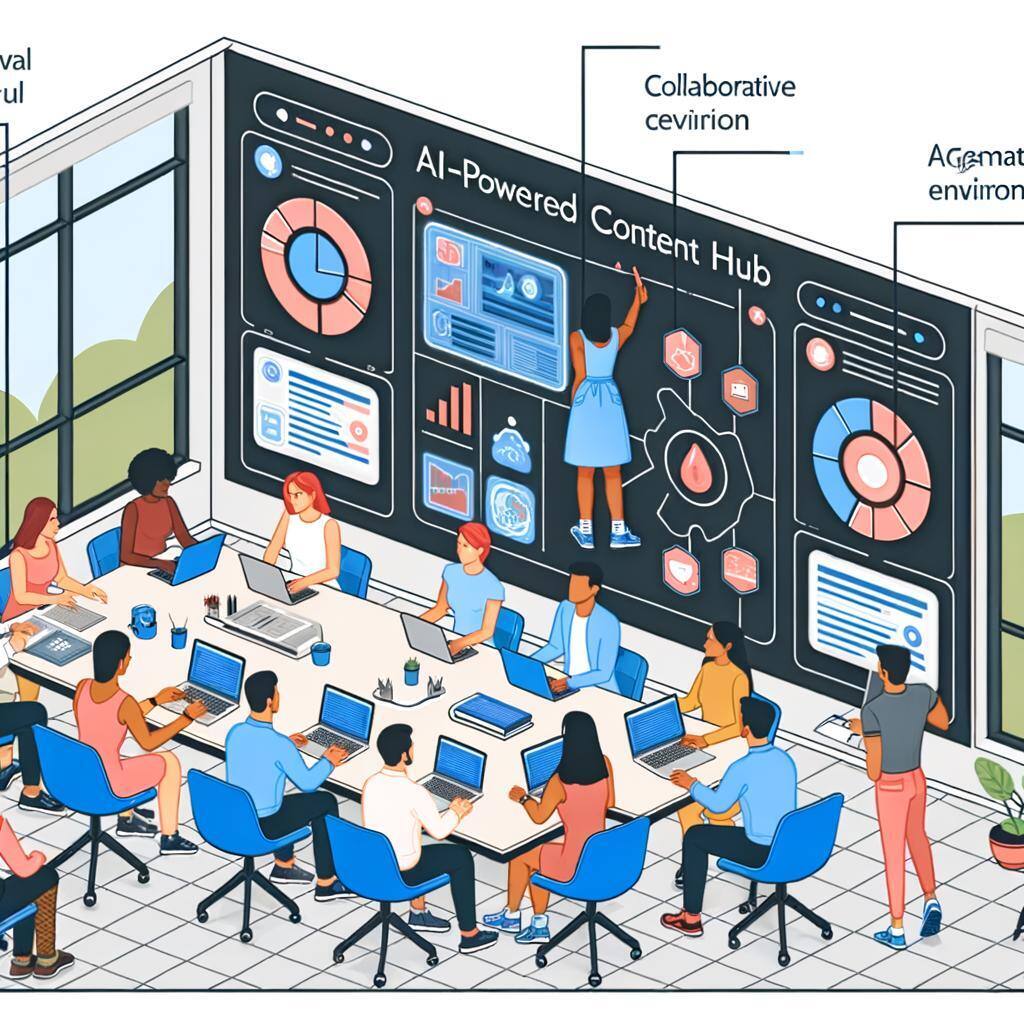
Producing high-quality, engaging content is critical for attracting and retaining customers. However, for many businesses, creating and managing content across multiple formats and channels can be a time-consuming and resource-intensive process. That’s where Breeze by HubSpot comes in, transforming the way content is created, optimized, and repurposed within HubSpot’s Content Hub. In this blog post, we’ll explore the key Content Hub updates powered by Breeze AI, showcasing how these features can help marketers streamline their content creation efforts, increase productivity, and generate more leads.

In the world of marketing, speed, data-driven insights, and the ability to engage customers on multiple channels are crucial to success. Recognizing this, HubSpot has introduced powerful AI updates to its Marketing Hub through Breeze by HubSpot, helping marketers streamline content creation, automate key tasks, and generate more leads. In this post, we’ll dive deep into the Marketing Hub updates powered by Breeze AI, exploring how they can transform your marketing strategy and deliver better results.
YOUR NEXT DECISION
Tell us what's slowing you down, what you've tried, and what needs to be different. We'll start there.
Come with a problem. You don't need a specification.
The first conversation helps define the next step, whether or not that step is with us.