You Vibe Coded It. Who Keeps It Working?
Let’s say you’ve used an AI coding tool to build a customer portal. It looks good. Customers can log in, find what they need, and get something done without calling your office. You’ve solved a real problem, and you didn’t have to wait for someone else to build it for you.
A month later, one of its dependencies needs a security update. The agent proposes a patch, runs the tests, and tells you everything passed. How do you decide that’s enough to release it while your customers are using the system?
That’s something I’d want to work through with you before you’re staring at an update wondering whether to click Deploy.
What happens after people start using it?
Once your team or your customers depend on that application, someone needs to handle updates, investigate failures, and answer support questions. Changes need review, especially when they affect other systems or the information your business relies on.
Who reviews your code? Who checks access to customer data? Do your logs help explain what happened when something goes wrong, and are they collecting information they shouldn’t?
I’d ask those questions if you’d hired a development team, too. They can be easy to miss when you get from an idea to a working application so quickly that people are already using it before you’ve thought through how to look after it.
Just the agent?
An agent can help with maintenance. It can help prepare patches, investigate problems, and explain code you didn’t write yourself. We should make use of that.
I’d still want us to understand how we’re deciding its work is ready. Passing tests tells us something useful. We also need to know whether those tests cover what your business depends on.
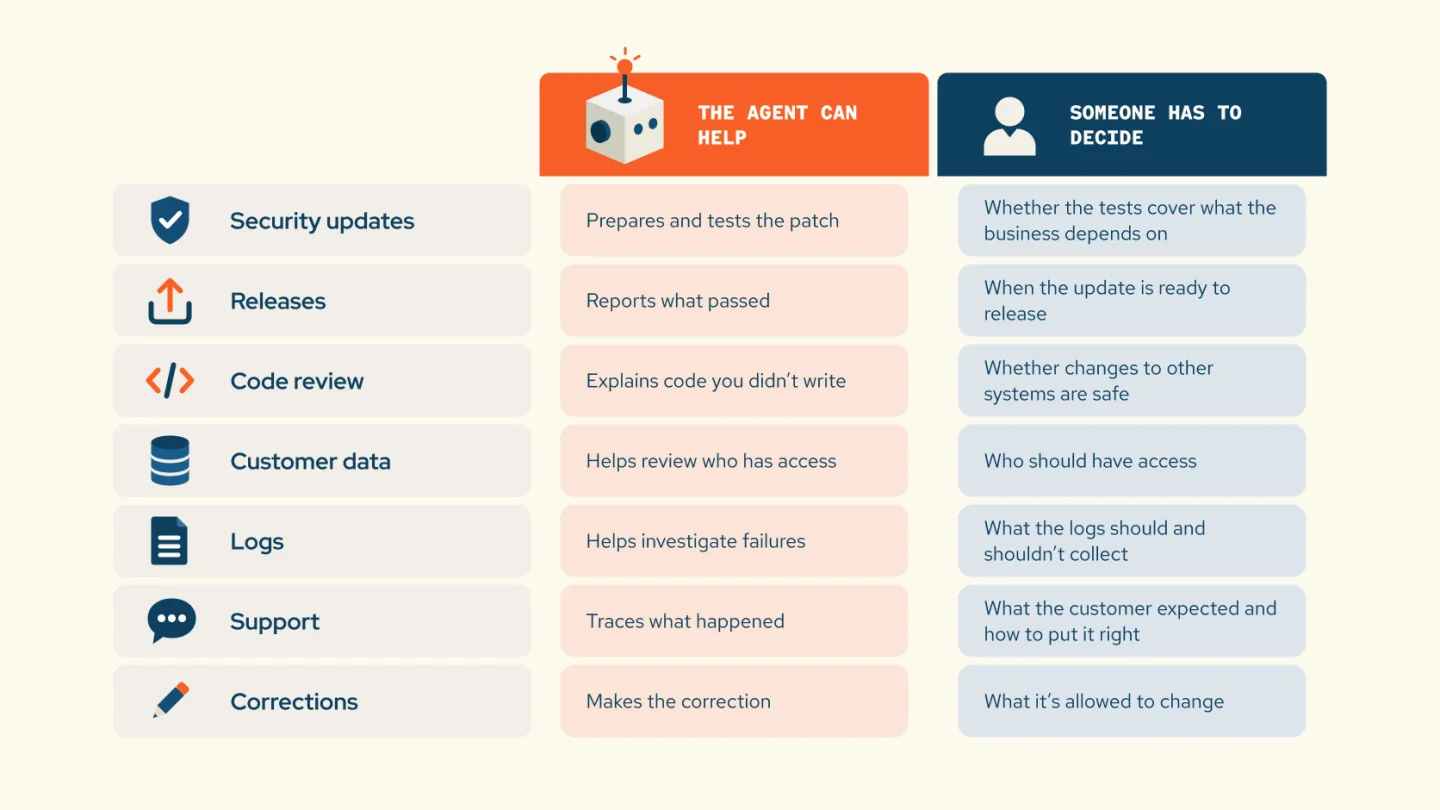
Support raises similar questions. Say a customer tells you their information is wrong. The application hasn’t crashed, and the monitoring hasn’t raised an alarm. Someone needs to understand what the customer expected, trace what happened, and decide how to put it right. If we ask an agent to make the correction, we need to be clear about what it’s allowed to change.
That takes an understanding of your business as well as the software. The person who knows how your billing works may recognize a problem that wouldn’t look like a software failure at all. I want that person involved.
How we can help at Clevyr
At Clevyr, we can help you understand what you’ve built and what your business needs to keep it working.
We can sit down with you, look at how you’re using the application, and work through what needs attention. That might include reviewing the code and how it handles data, looking at its connections to other systems, or figuring out who’s responsible when someone needs support.
There’s an education piece here, too. We can help you and your team get better at evaluating what an agent produces and recognizing when you need another set of eyes. You should understand enough about your application to make informed decisions about changes, access, and support.
That’s where we can put decades of experience creating and maintaining software to work for you. How much help you need will depend on what you’ve built, who’s using it, and what happens to your business when it stops working.
I wrote recently about taking responsibility for what happens after software is built. That responsibility follows the application into everyday use, however you created it.
If you’ve built something useful, bring us what you’ve created and what you need it to do. We can help you work through what it’ll take to keep it working.
Keep reading
Oct 28, 2026
Autonomous to Do What?
Let's take a really common thing leaders say: "Take care of this customer." You already understand that it comes with limits.

Oct 13, 2026
Software in a Service: Taking Responsibility for What Happens Next
An integration fails on a Tuesday morning. Website inquiries stop reaching the CRM. Nobody notices until a customer calls to ask why no one got back to them.

May 18, 2026
Why AI-First Development Is Going to Cost You More in the Long Run
There’s a narrative taking hold right now that goes something like this: AI can write all the code, you don’t need as many developers, and the ones you do keep just need to be fast with a prompt. Fire your senior engineers. Hire a junior and an AI subscription. Ship ten times faster at a fraction of the cost.