Managing sensitive patient information while ensuring operational efficiency is no small task. Healthcare providers must balance regulatory compliance, data security, and patient engagement—all without sacrificing the quality of care. A robust CRM (Customer Relationship Management) system like HubSpot offers healthcare organizations the tools they need to streamline their workflows while safeguarding patient data. One of the standout benefits of HubSpot for healthcare is its ability to integrate with HIPAA-compliant tools for secure data management. This post will explore how HubSpot addresses the unique needs of healthcare organizations, with a focus on HIPAA-compliant data management and customizable workflows.
Healthcare professionals face increasing demands to deliver high-quality care while managing a growing number of administrative tasks. From scheduling follow-ups to sending medication reminders, these repetitive processes can be time-consuming and error-prone. Automating workflows not only reduces the administrative burden but also ensures patients receive timely, personalized communication, enhancing their overall experience. HubSpot’s customizable workflows are a game-changer for healthcare organizations, enabling them to automate patient communication while maintaining compliance and operational efficiency. This blog explores the value of automated healthcare workflows, practical use cases, and how HubSpot empowers providers to streamline patient care.
Healthcare organizations face mounting challenges in delivering efficient, personalized care. From managing complex patient data to ensuring HIPAA compliance and improving provider-patient communication, the demands on healthcare teams are greater than ever. These challenges highlight a crucial need for streamlined systems that empower providers to focus on patient care rather than administrative burdens. A CRM (Customer Relationship Management) system tailored to the healthcare industry addresses these pain points, making it an essential tool for modern healthcare companies. In this post, we’ll explore why CRMs are vital, the benefits they bring to healthcare providers, and how platforms like HubSpot can offer effective solutions.
Today’s healthcare organizations face unprecedented challenges. From navigating strict compliance requirements to addressing growing patient expectations, the need for streamlined operations and personalized care has never been greater. That’s where a Customer Relationship Management (CRM) system comes into play. For healthcare providers, a CRM is more than just a tool for managing patient records—it’s a solution that can revolutionize how you engage patients, optimize workflows, and deliver exceptional care. Let’s explore why healthcare organizations need a CRM now more than ever and how tools like HubSpot can address these challenges.
The healthcare industry is in the midst of a significant evolution. As patient expectations rise, compliance requirements grow more complex, and administrative workloads increase, healthcare providers are searching for solutions that streamline operations while enhancing patient care. Meeting these challenges requires more than incremental changes—it calls for a thoughtful embrace of modern tools that prioritize efficiency, trust, and engagement. This is where modernized patient relationship management (PRM) tools, such as a Healthcare CRM, come into play. With the right CRM, healthcare organizations can not only meet current demands but also build a foundation for sustainable, patient-focused growth.
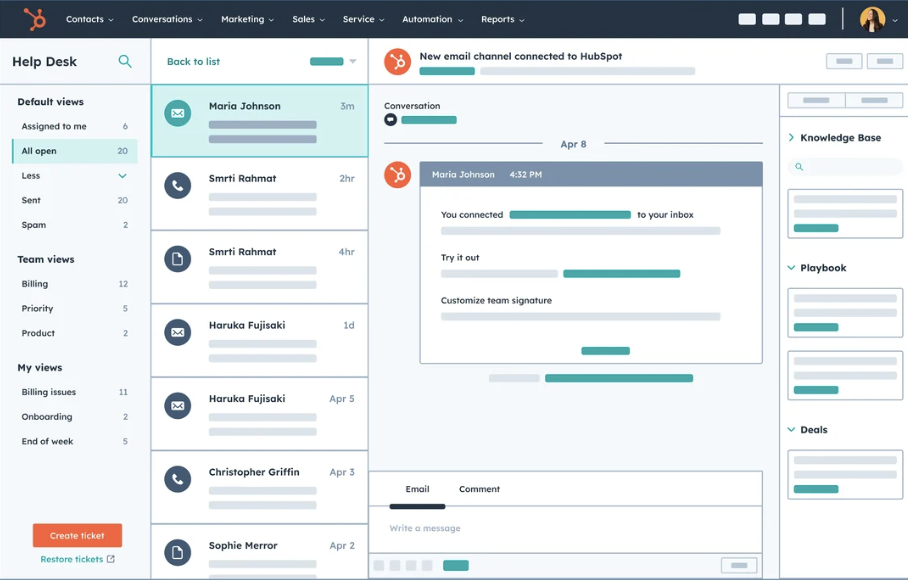
Managing customer communication and support is critical for delivering a seamless customer experience. HubSpot offers three powerful tools to help businesses achieve this: Inbox, Chatbots (or Chatflows), and the Help Desk. Each tool serves a specific purpose but works harmoniously to create a streamlined communication process. Here's a closer look at how they function and when to use them effectively.
November brought an impressive range of HubSpot updates designed to streamline marketing, sales, service, and CRM operations. Here’s a deep dive into these enhancements to help you make the most of HubSpot’s capabilities:
The Importance of Smooth Data Flow Across Your Tech Stack Efficient data flow is necessary for keeping sales, marketing, and service teams aligned. Poor integration can lead to data silos, miscommunication, and inefficiency. Ensuring a smooth flow of data across your entire tech stack helps streamline operations, improve team collaboration, and provide a unified view of the customer. In this post, we’ll cover key integration tips to ensure seamless data flow across your tech stack, empowering your teams to work more effectively.
What Are RevOps Metrics? In the world of Revenue Operations (RevOps), metrics play a crucial role in understanding and optimizing the performance of sales, marketing, and service teams. These RevOps metrics provide the data needed to align departments, identify areas of improvement, and drive strategic growth. By tracking these key performance indicators (KPIs), businesses can focus on data-driven decision-making, ensuring continuous improvement and sustainable revenue growth. This guide will dive deep into the essential RevOps metrics, exploring why they matter and how they drive your business forward.
Why Alignment is Critical for Revenue Growth For businesses aiming to achieve sustainable revenue growth, aligning people, processes, and technology is essential. Without alignment, departments work in silos, leading to inefficiencies, miscommunication, and missed opportunities. By creating synergy between teams, optimizing processes, and leveraging the right technology, businesses can streamline operations and drive long-term growth. In this post, we’ll explore why aligning people, processes, and technology is critical for scalable success and how to achieve this balance.
Why RevOps Alignment is Crucial for Growth A well-executed Revenue Operations (RevOps) strategy brings together sales, marketing, and service teams around a unified revenue goal. By aligning teams and integrating the right tools, businesses can streamline processes, enhance collaboration, and drive sustainable growth. Ensuring that every department works cohesively and efficiently is the key to maintaining long-term scalability and revenue success. In this blog, we’ll discuss how to align your teams and tools through an optimized RevOps strategy.
The Importance of Focused Team Efforts In today’s competitive business environment, it’s essential for teams to concentrate on activities that directly impact revenue growth. Revenue Operations (RevOps) aligns teams across sales, marketing, and service, ensuring they focus on high-value tasks that drive revenue. This post explores how RevOps helps teams stay focused on what matters most.
Why Automation is Key to Efficiency As businesses grow, manual processes can become a bottleneck to efficiency and productivity. HubSpot’s automation tools streamline these repetitive tasks, allowing teams to focus on high-value activities that directly impact revenue. Automation not only reduces human error but also frees up time for strategic initiatives. In this post, we’ll explore how HubSpot’s automation features can help businesses improve efficiency and eliminate manual work.
What Are RevOps Solutions? Revenue Operations (RevOps) solutions align marketing, sales, and service teams to foster collaboration and eliminate silos that often hinder business growth. By unifying these traditionally separate functions, RevOps allows businesses to streamline operations and focus on what truly matters: driving revenue. Breaking down silos is a fundamental aspect of RevOps, and it’s key to creating a more efficient, transparent, and data-driven organization. In this post, we’ll explore how RevOps solutions dismantle these barriers and why businesses should embrace this strategy to scale effectively.